

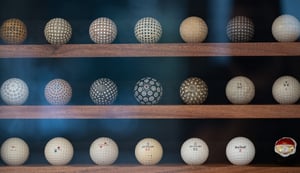
Long before golf balls became precisely engineered pieces of sporting technology, they were shaped by hand, adapted through observation and continually reinvented by players and manufacturers.
From leather pouches filled with feathers to moulded gutta percha, wound rubber cores and distinctive mesh patterns, every transformation left its mark on the game. Distances changed, new shots became possible and golf courses evolved in response.
To follow the history of the golf ball is therefore to follow the history of golf itself — and to understand more fully the equipment, skills and traditions that defined the hickory era.
Why the golf ball matters in Hickory Golf
When discussing Hickory Golf, attention naturally turns to handcrafted clubs and wooden shafts. Yet the golf ball has been just as influential in shaping the way the game is played. A club and a ball never evolve independently. Each new ball demanded something different from the golfer's swing and, in time, from the clubs placed in the player's hands.
Understanding this evolution provides a deeper appreciation of the equipment used during the hickory era and the unique playing characteristics that continue to attract golfers today.
Selecting the right ball for hickory play is therefore not simply a question of performance. It is a way of protecting historic equipment, rediscovering the feel of an earlier game and preserving the authentic spirit in which these clubs were created.
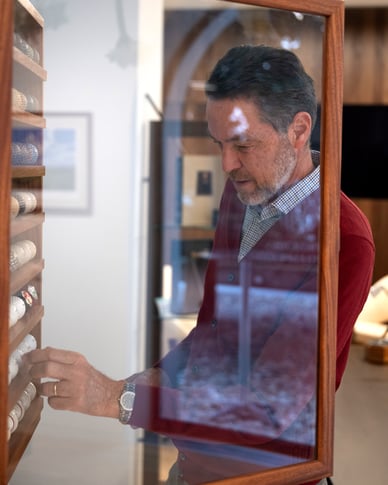
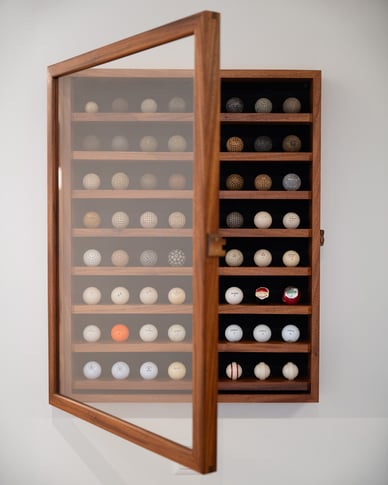
From Featherie to Gutta Percha
The earliest chapters of golf ball history belong to a world in which every piece of equipment carried the visible mark of the craftsman who made it.
Long before modern golf balls appeared, players relied on the famous featherie golf ball.
Handcrafted from stitched leather and tightly packed goose feathers, featheries required exceptional craftsmanship and delivered impressive performance for their time. Yet they were costly, fragile and beyond the reach of many golfers, reflecting a game still largely reserved for those able to afford its specialised equipment.
The search for a more practical alternative would transform the game. A major breakthrough arrived in the mid-nineteenth century with the introduction of the gutta percha golf ball.
Manufactured from the natural latex of the Palaquium tree, gutta percha balls proved more durable, easier to produce and considerably more affordable. Their success made golf more accessible while laying the foundations for future innovations in ball design.


The Gutta Percha ball and the Hickory Era
As the gutta percha ball became more widely used, players noticed that older balls, naturally marked through play, often performed better than perfectly smooth ones.
It was one of golf's most important discoveries, born not in a laboratory but through observation on the course. This discovery encouraged manufacturers to experiment with textured surfaces, leading to the earliest forms of aerodynamic design.
Craftsmen and manufacturers began reproducing these accidental marks deliberately, pressing lines, grooves and raised patterns into the surface of the ball. What had first appeared as wear became a new form of design. While these patterns were very different from today's dimples, they represented an important step in improving flight stability and consistency. Combined with original hickory clubs, the gutta ball delivered the balance of feel, control and responsiveness that defined golf during this remarkable period.
Yet golf was becoming more competitive, and players were beginning to search for a ball capable of travelling farther while retaining control. The next transformation would come from inside the ball rather than from its surface.
The arrival of the Haskell Golf Ball
At the turn of the twentieth century, the Haskell golf ball, built around a solid core wrapped with elastic rubber threads beneath a gutta percha cover, introduced a completely new level of performance.
Golfers could achieve greater distance with less effort, while the ball's livelier response required established strategies to be reconsidered.
This was not merely an improvement in equipment. Longer drives changed the scale of the game itself. Holes were extended, hazards were repositioned and architects were required to rethink how a course should challenge the accomplished player.
From this moment onwards, the development of hickory clubs and golf balls became increasingly intertwined. Many clubs produced during the early decades of the twentieth century were shaped by the possibilities — and demands — of the new wound ball.
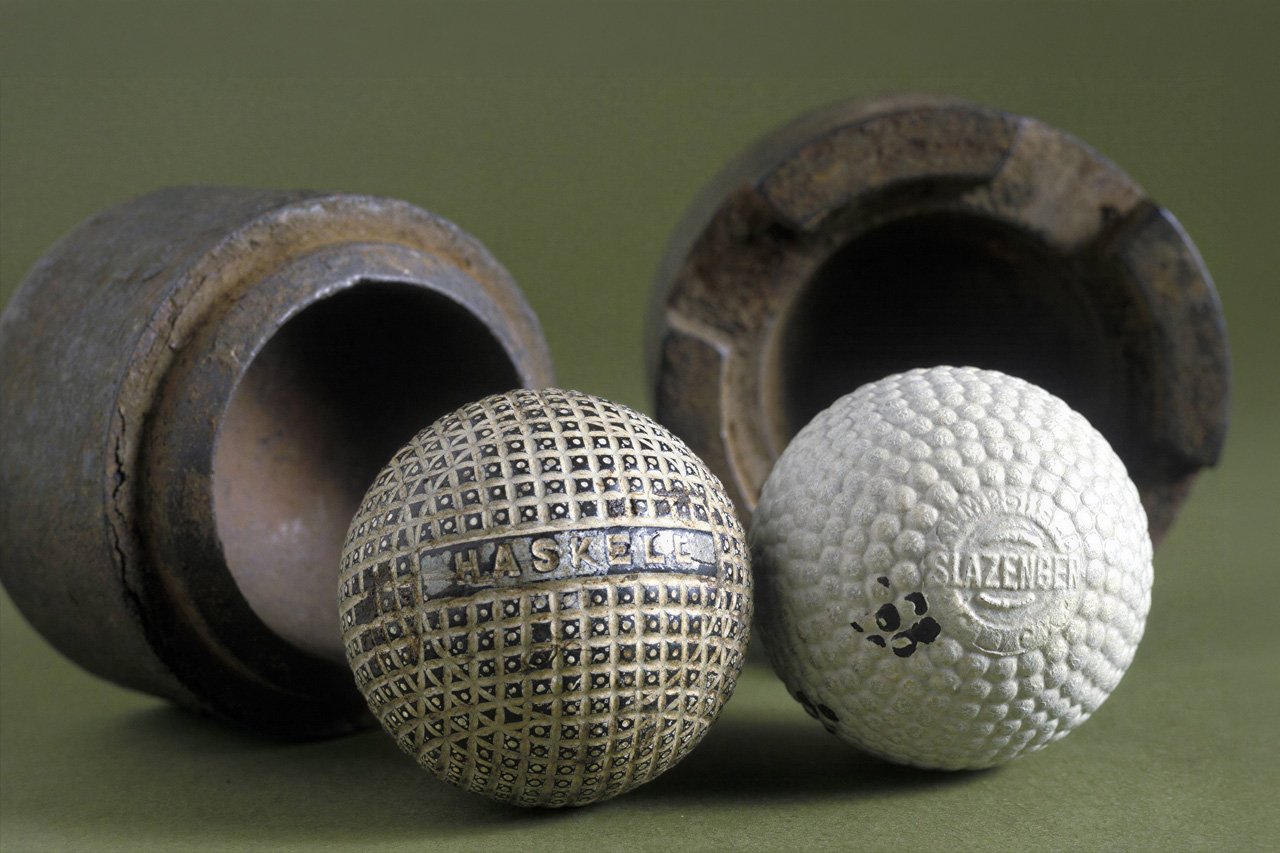
Image source: USGA (www.usga.org)
One game, two Golf Balls: Britain and America
Innovation did not concern materials alone. As golf expanded internationally, even the dimensions of the ball became a matter of competitive regulation.
For many decades, two official standards existed. In the United States, the American golf ball measured 1.68 inches (42.67 mm) in diameter, while the British golf ball, used throughout Great Britain and much of Europe, measured 1.62 inches (41.15 mm).
For players crossing the Atlantic, the difference was more than theoretical. The choice of ball could subtly influence trajectory, distance and the way a familiar course was played.
Although the difference appears small, the smaller British ball produced less aerodynamic drag and was often considered capable of travelling slightly farther under favourable conditions. As international competition expanded, the larger American standard gradually became the universal size adopted worldwide.
For historians, collectors and modern hickory players, this distinction helps explain why a club from Britain may respond differently when paired with a contemporary ball. Historic equipment was created within the standards of its own time.
Mesh Golf Balls: a bridge between tradition and modern design
By the 1920s, the wound ball had become established, but its external appearance was still far from standardised. Manufacturers continued to explore how different surface patterns could influence flight and contact with the clubface.
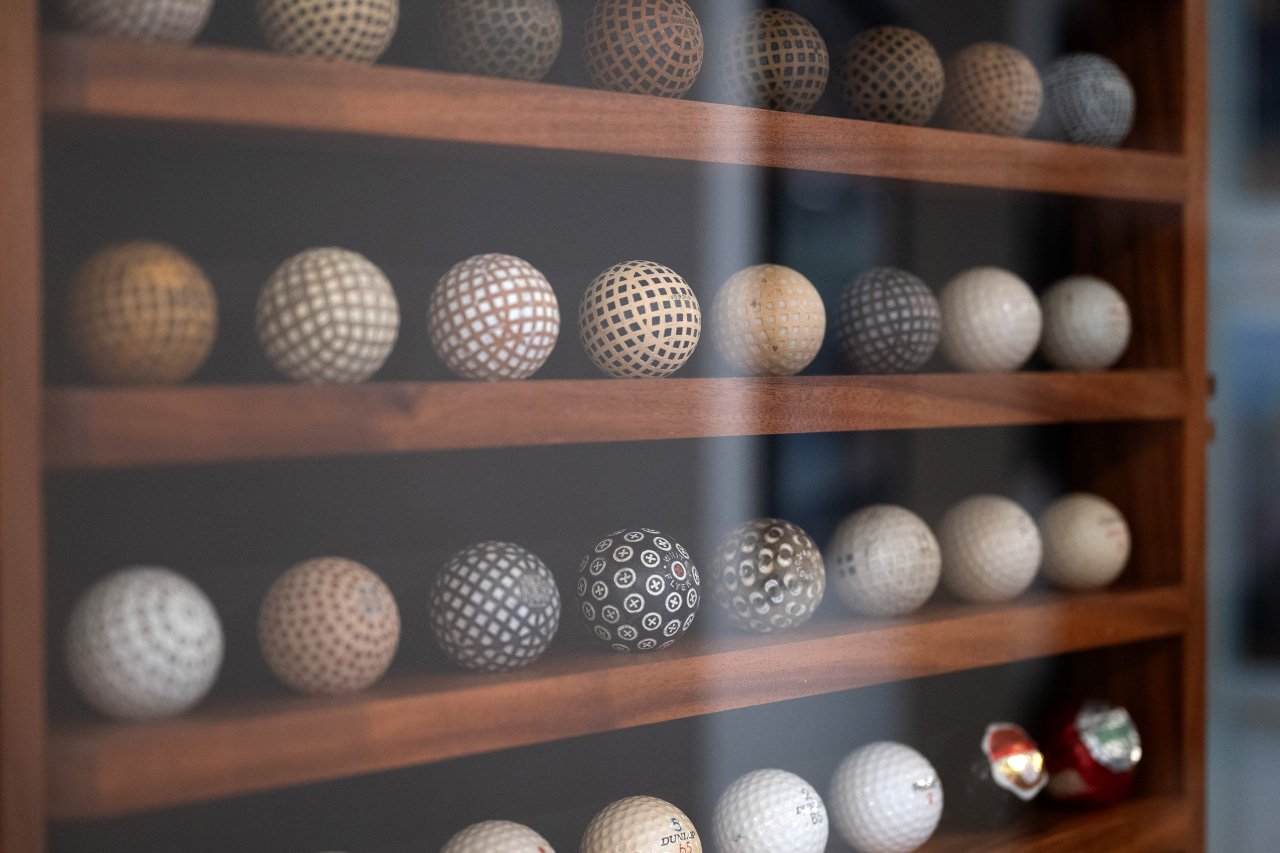
One of the most distinctive results was the mesh golf ball, recognised by its lattice-like cover rather than the circular dimples used today. Its geometric surface gave the ball an unmistakable appearance — one that remains closely associated with the final decades of competitive hickory play.
The textured surface was designed to provide reliable flight characteristics while complementing the feel and response of contemporary clubs.
Many collectors and enthusiasts consider mesh golf balls to represent the final chapter of the traditional hickory era before the modern dimpled ball became the worldwide standard.
For today's hickory golfer, a reproduction mesh ball offers more than a period-correct appearance. Its softer feel and distinctive flight help recreate something of the rhythm, judgement and shot-making required by the game of the 1920s and 1930s.
The story behind the famous Dunlop 65
Not every famous golf ball earned its place in history through technology alone. Some became legendary because they were connected to a moment of exceptional sporting achievement.
Among the most iconic golf balls ever produced, few have achieved the reputation of the Dunlop 65.
Its name was inspired by one of the greatest rounds in championship golf. During the second round of The Open Championship at Royal St George's Golf Club in 1934, Henry Cotton recorded a remarkable score of 65, an extraordinary achievement for the period. Cotton went on to win the championship by five strokes, and the performance immediately became part of golfing history. At a time when a score of that kind seemed almost beyond reach, the number 65 became inseparable from his performance.
Dunlop recognised that the number had already entered golfing memory and adopted "65" as the name of one of its most celebrated balls. The product quickly became one of the company's most successful models and evolved into a globally recognised brand.
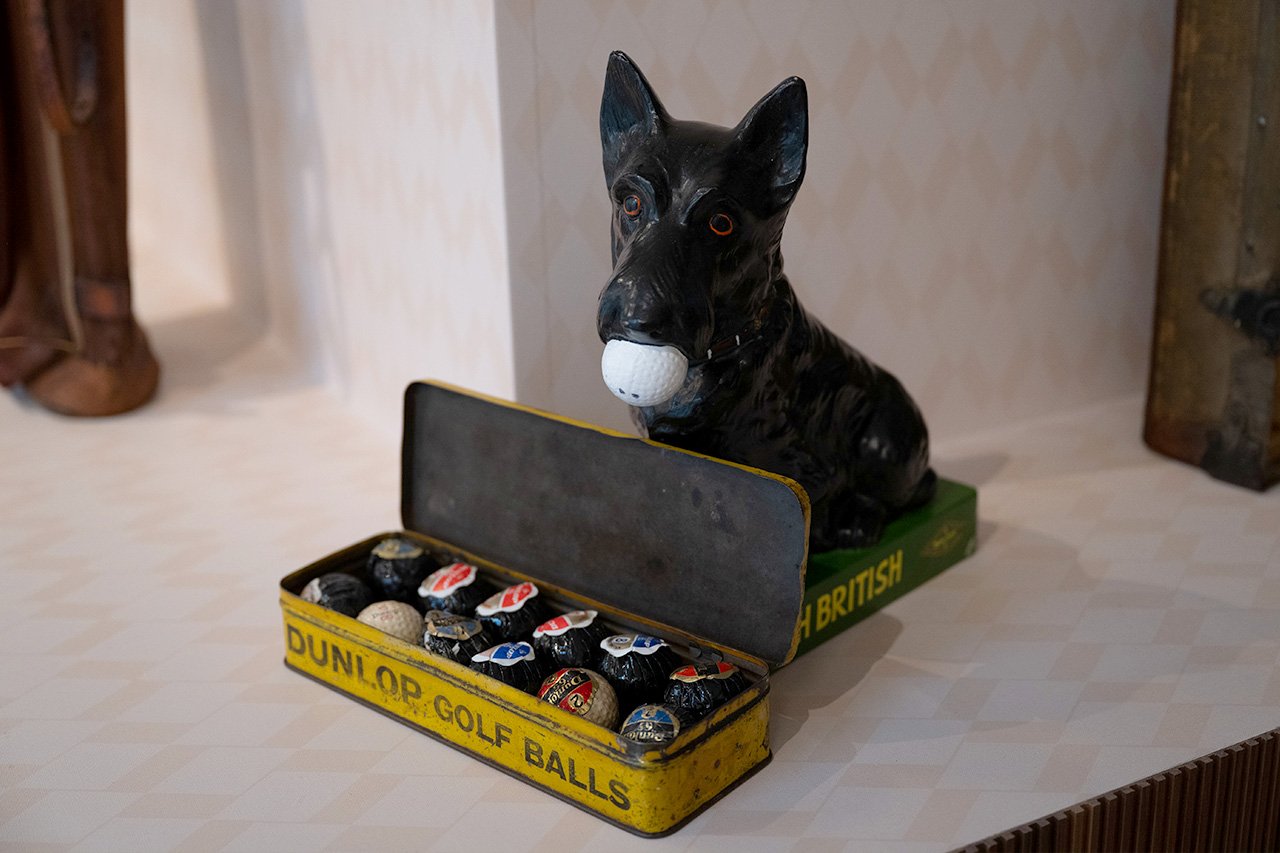
Preserved today at the Hickory Golf Masters Museum, the original yellow Dunlop 65 tin is more than a piece of historic packaging. It represents the moment when a remarkable round, a celebrated player and a successful piece of golf equipment became part of the same story.
The Ryder Cup ball: a rare chapter in golf ball history
Even as the dimpled ball became increasingly familiar, manufacturers continued to question whether one universal size offered the ideal balance between distance and control. During the 1960s, manufacturers including Dunlop, Spalding and Slazenger introduced a distinctive model known as the Ryder Cup Ball.
Produced with a diameter of approximately 1.64 inches — while often marketed on the packaging as 1.65 inches — it represented an interesting compromise between the British and American ball sizes. Positioned between the traditional British small ball and the larger American standard, it reflected a period in which golf had become increasingly international but had not yet completely abandoned its regional differences.
Although it never became the worldwide standard, the Ryder Cup Ball remains a fascinating example of how manufacturers experimented with design and specifications during a period of rapid innovation in golf equipment.
Today, it is remembered as a rare collector's item and an intriguing milestone in the evolution of the golf ball. Its unusual dimensions make it a physical reminder of a time when the standards of the modern game were still being negotiated.
Choosing the best golf ball for Hickory clubs
The history of the golf ball is not only a subject for collectors. It has practical consequences for anyone who wishes to play with original hickory clubs today.
Many contemporary golf balls are designed to perform with the higher swing speeds and firmer characteristics associated with modern steel and graphite equipment. Original hickory clubs perform differently. Their flexibility and natural feel are generally better matched with low-compression golf balls, which reduce stress on antique equipment while providing a softer response at impact. With original hickory clubs, excessive hardness and high-impact forces may place unnecessary strain on ageing wooden shafts and historic clubheads.
The most suitable ball is therefore not necessarily the one that travels farthest. It is the one that allows the club to respond naturally, rewards controlled shot-making and respects the age and construction of the equipment.
Reproduction mesh balls and selected low-compression modern models provide two different approaches: one prioritises historical character, while the other offers greater availability and consistency for regular play.

Every ball tells the story of its time
From a hand-stitched leather sphere to a precisely moulded piece of sporting equipment, the golf ball has never stopped evolving. Yet every version tells us something about the golfers who played it, the clubs they carried and the courses they faced.
Each stage in the ball's evolution reveals a different vision of the game: its craftsmanship, its ambitions and the continual search for greater distance, consistency and control.
At Hickory Golf Masters, this knowledge is not preserved as history alone. It informs the way clubs are restored, displayed and returned to play at our Museum and restoration workshop in Lugano (click here to visit our Museum). Pairing a carefully preserved hickory club with an appropriate ball allows the golfer to experience more than antique equipment: it reveals the tempo, imagination and character of a game played more than a century ago.
Because to understand how the ball evolved is to understand why Hickory Golf still feels so different today.