


We recently revisited an article published in A Wee Nip and, as we relived the ironic, heartfelt and quietly brilliant stories of its contributors, we found ourselves asking a simple question:
Why should anyone play hickory golf?
In an era dominated by carbon composites, launch monitors and promises of ever greater distance, choosing to play with pre-1935 clubs may seem, at first glance, an act of nostalgia. In truth, it is something far more deliberate. It is a return to essence.
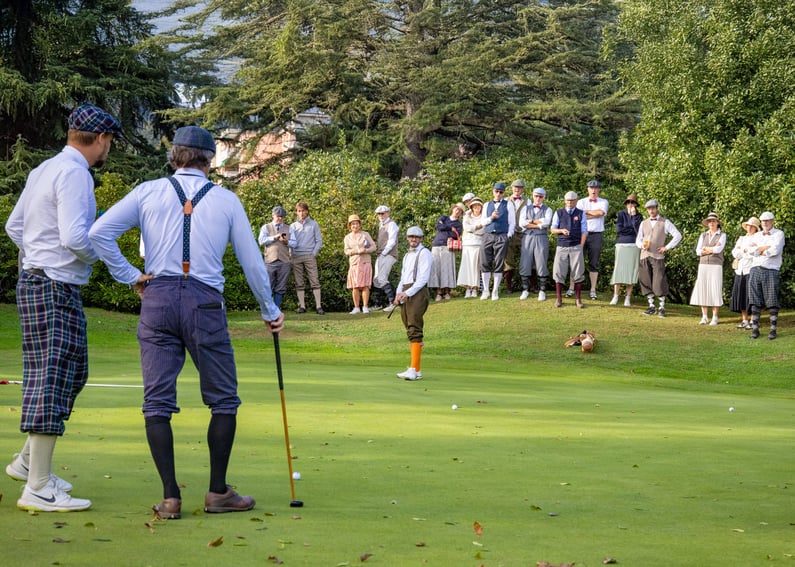
Modern equipment vs Hickory: Distance or discernment?
Modern golf equipment is a triumph of engineering. Over the past decades, technology has delivered extraordinary precision and forgiveness. Yet, as many experienced golfers will admit, progress sometimes comes at a subtle cost.
Distance has increased. Margins for error have widened. Feedback has softened.
With hickory, the opposite occurs.
The strike is never guaranteed. The sweet spot must be found, not assumed.
Tempo matters. Balance matters. Intention matters.
In the interview published in A Wee Nip, Mike Stevens puts it beautifully:
"I find great appeal in the uncertainty involved in the equipment and the challenge involved in striking the ball well. The game is just more interesting to me. There are many more varieties of shots in a round of golf now and that makes it fun.”
With hickory clubs, golf becomes once again a game of imagination and strategy rather than sheer velocity. The ball is not overpowered. It is persuaded.
Playing the course as it was intended
Paolo Quirici expresses it with admirable clarity:
“Play the course the way it was thought to be played.”
Many of the world’s most historic venues were designed long before the era of titanium drivers and multi-layer balls. Their architecture rewards placement, trajectory and thoughtful positioning.
A reduced set of clubs, often eight or nine, carried in a light bag, encourages clarity. Without measuring devices or mechanical assistance, the rhythm of the round changes. The walk becomes part of the experience. The strategy becomes unambitious, yet precise.
One begins to see the course differently: not as an obstacle to overpower, but as a landscape to navigate with intelligence and restraint.
 Paolo Quirici, Geman Hickory Open Championship, 2025
 Humility, surprise and the quiet smile
Those who try hickory for the first time often report the same reaction: surprise.
The shot is struck. The ball rises. And a smile appears.
Quirici offers an invitation that resonates deeply:
In essence, you should give it a try before any prejudgement and preconditioning. I can promise you would be pleasantly surprised of the outcomes.
Hickory demands humility. Expectations are recalibrated. A well-struck shot is not routine, it is earned. And precisely because it is earned, it is remembered.
A personal calling
There is also something more intimate at play.
In his interview featured in A Wee Nip, Matthew Dodds captures it with characteristic wit:
“But with my hickories, I believe I have found my calling.”
Beneath the humour lies a profound truth. Many who embrace hickory speak not simply of enjoyment, but of recognition — a sense that the game, stripped of excess, reveals its truest form.
It is not nostalgia. It is authenticity.
More game, less performance
Hickory golf is not for everyone. Nor should it be.
In the same A Wee Nip interview feature, Mike Stevens offers a reminder worth keeping close:
“People should play golf in whatever manner gives them the most pleasure. Hickory golf may not be for everyone but however you play, enjoy it and don’t take it to seriously. It’s a game and as my favorite golfer, Walter Hagen said, “Stop and smell the flowers now and then.”
At its heart, hickory restores proportion.
Three good shots in a round can feel like a privilege. Expectations soften. Appreciation deepens. The company of fellow players becomes central. The walk between shots regains meaning.
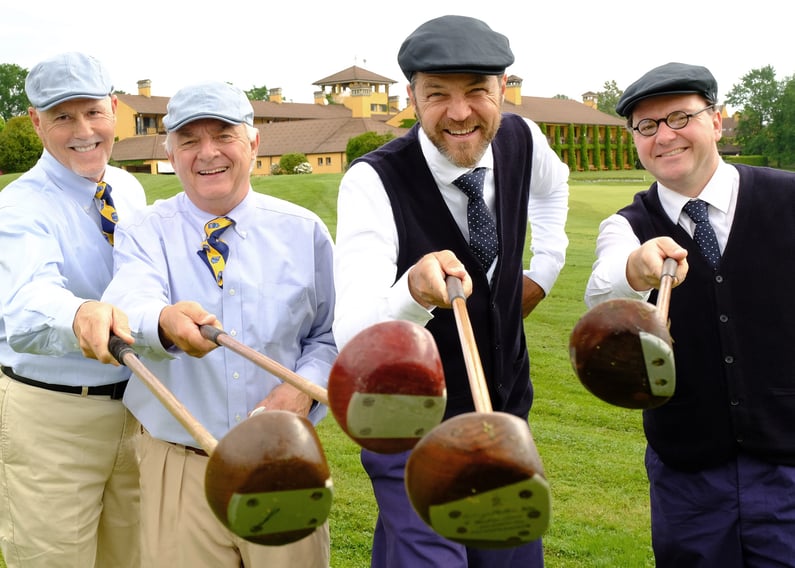 The Lionel Freedman Hickory Trophy, x, 2018
Why become a Hickory Golfer?
To test oneself differently.
To rediscover humility.
To value strategy over speed.
To experience genuine feedback at impact.
To honour the heritage of the game.
Hickory does not promise greater distance. It promises deeper memories.
And for those willing to embrace its discipline and its charm, it offers something increasingly rare in modern sport: a profound and enduring connection to the game as it was meant to be played.