
Some tournaments are remembered for their scores. Others for the names engraved on a trophy. And then there are events that become something more: a moment in time, a gesture of respect towards the origins of the game, a story destined to continue.
The Hickory Masters 2026 at Circolo Golf Villa d’Este was one of those rare occasions.
Held on Lake Como during the centenary year of one of Italy’s most historic golf clubs, the first Hickory Masters marked the beginning of a new chapter in golf history: the first Major tournament dedicated to hickory golf.
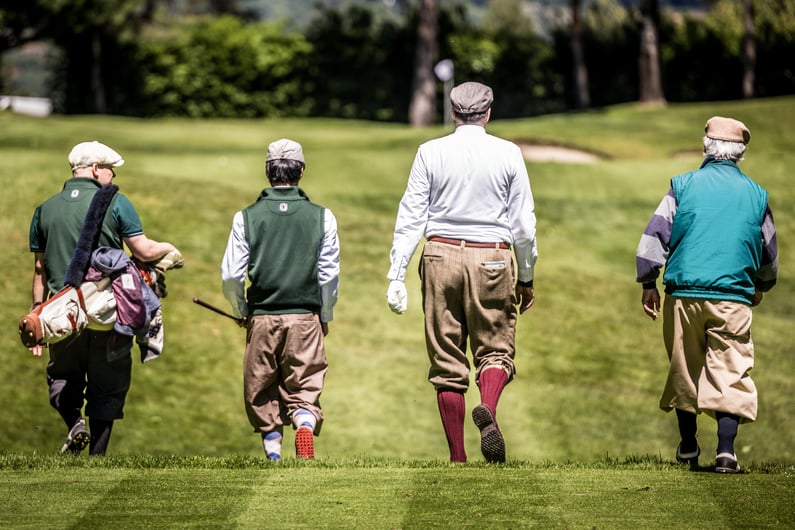
For two days, 37 gentlemen golfers from 16 nations (Australia, Austria, China, Germany, Finland, France, England, Italy, Liechtenstein, the Netherlands, Portugal, Scotland, Spain, the United States, Sweden and Switzerland), gathered at Villa d’Este to play the game as it was played a century ago.
Knickerbockers, shirts and ties, classic golf shoes, caddies carrying the bags: this is Hickory Golf. Elegant, passionate, fair and relaxed, even in competition.
At the end of a dramatic final round, interrupted twice by lightning and thunder, Austrian tour professional Markus Brier became the first Major champion in hickory golf. With a total score of 141 strokes, three over par, he won the Open category and became the first name to be engraved on the newly created Silver Rake Niblick.
A small field, an international spirit
The field was intimate, but exceptional — international, highly experienced and fully worthy of the title “Masters”.
Among the players were three former Hickory World Champions: Perry Somers from Australia, world champion in 2010; Paolo Quirici from Switzerland, world champion in 2013; and Andrew Marshall from England, world champion in 2015.
Alongside them were internationally experienced professionals including Thomas Gögele from Germany, Per Nyman from Sweden, Emanuele Canonica from Italy, Jean-François Remésy from France, Iain Forrester and Gary Orr from Scotland.
In total, 14 professionals competed in the tournament. They were classified exclusively in the Open category, where a total prize fund of 30,000 euros was at stake, including 10,000 euros for the winner.
The players were competing for the Silver Rake Niblick, a newly created travelling trophy. The winner of the Open category earns the right to have his name engraved on it: a gesture that already gives the tournament the feeling of a tradition in the making.


Players and guests arrived from across Europe and beyond. Wayne Xing, president of the Society of China Hickory Golfers, travelled from Hong Kong to attend the event as an enthusiastic spectator, further underlining the growing international interest in this traditional form of the game.
At Villa d’Este, hickory golf was not presented as nostalgia. It was alive, competitive, demanding and deeply human.
A museum evening before the first shot
The atmosphere of the Hickory Masters began before the first ball was struck.
On Monday evening, the professionals visited the Hickory Golf Masters Museum in Lugano, where they discovered the collection of original hickory clubs, admired one of the rarest objects in golf history and experienced, first-hand, the equipment that would define the days ahead.
The Silver Rake Niblick Trophy
During the visit, the players had the opportunity to admire and hold an original Rake Niblick, a club designed for use in sand and long grass and considered one of the rarest objects in the history of golf.
Made in 1895 by Willie Aveston, the Rake Niblick was never commercialized because its inventor decided not to register the patent for this special Niblick. Only a few examples were ever produced, two of which are now displayed in Lugano.
For the Hickory Masters, the Rake Niblick became more than an object of historical curiosity. It became the inspiration for the tournament trophy: a bridge between craftsmanship, rarity and competition.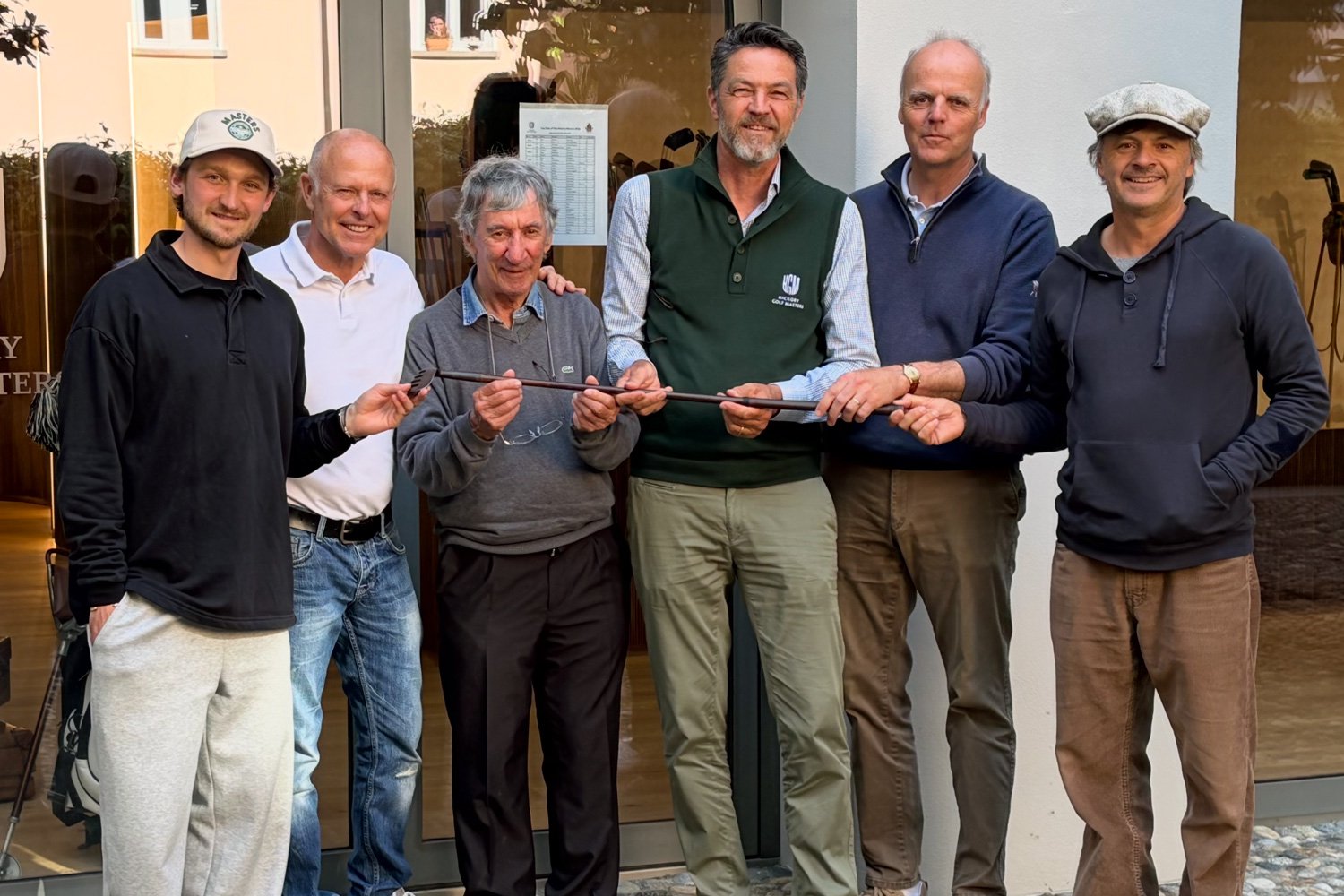
Wonder before the first shot
The museum evening also revealed the emotional power of the collection.
“Just look at this – all unique pieces by Tom Stewart,” exclaimed Andrew Marshall upon entering the museum.
For the next three hours, his eyes continued to light up as he discovered objects capable of making a professional golfer’s heart beat faster. Later, he wrote in the museum guestbook: “Congratulations on this amazing collection”.
Jean-François Remésy, winner of the Open de France in 2004 and 2005, took his first swings with a hickory club on the golf simulator at the museum. Known as a player with great feel in his hands, Remésy showed deep respect for the historic clubs.
“Brilliant, just brilliant,” he exclaimed when his first ball reached the Eiffel Tower on the screen.
He later wrote in the guestbook: “Thank you very much for giving me this unforgettable experience. It is a great pleasure to be here”.
It was a moment that revealed the true power of the event. Even players with decades of professional experience found themselves rediscovering golf with the curiosity and wonder of beginners.
Hickory masters 2026
Perry Somers opens the first edition of Hickory Major
The honor of opening the the inaugural edition went to Perry Somers, the Australian Hickory World Champion of 2010.
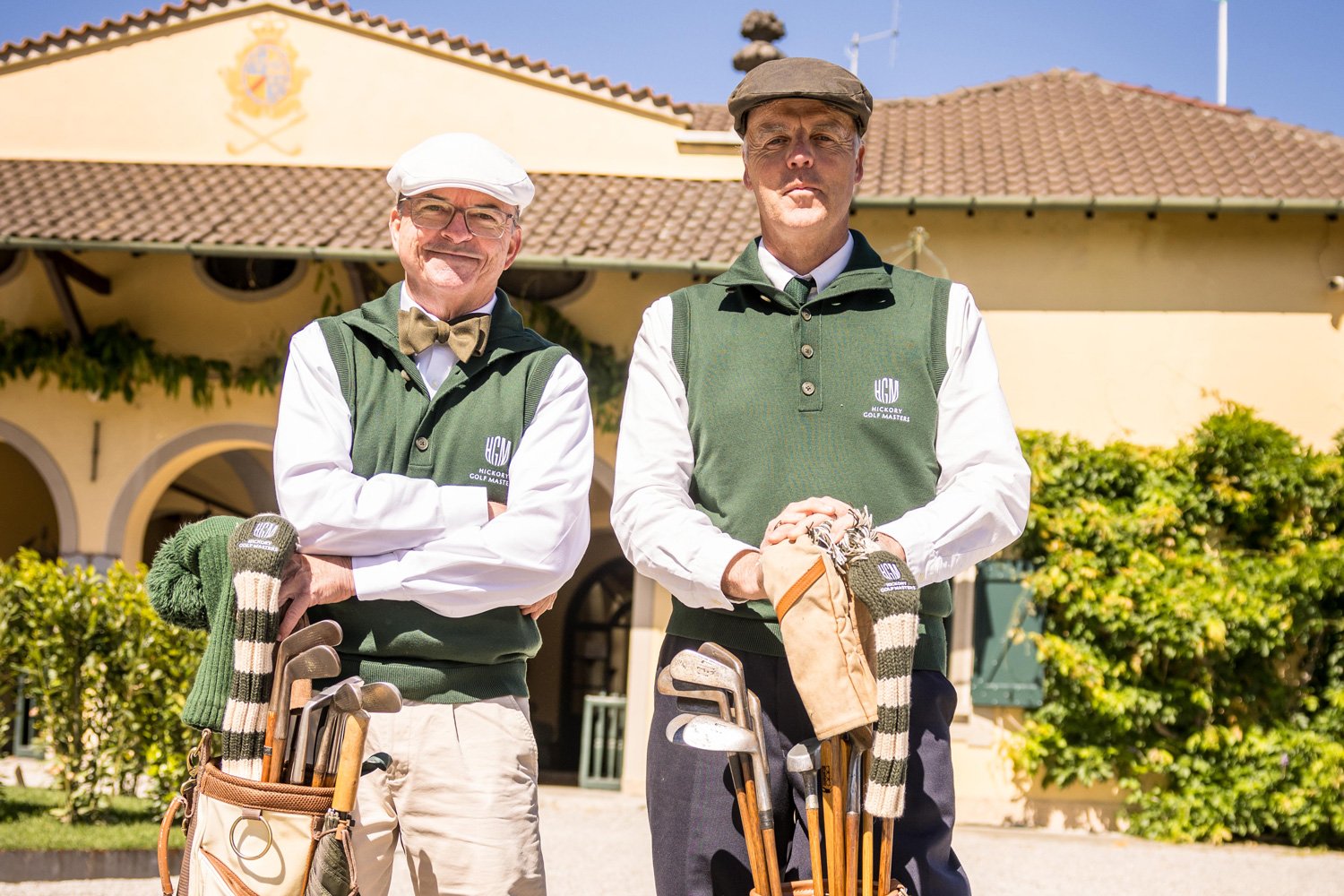
His presence gave the event both symbolic and sporting weight. Somers was not only one of the former world champions in the field, he also became one of the clearest voices in describing what made the Hickory Masters different from any other tournament.
"It's unique and wonderful that this tournament is exactly as it was in the interwar
period. There are only original clubs, no replicas. There are no rangefinders, no trolleys and no buggies – I love it! Everyone walks, even at 82 and even on this hilly course."
His words were directed, with admiration, towards Andrew Gauld, the oldest professional in the field.
In a few sentences, Somers captured the spirit of the Hickory Masters: authenticity, elegance, physical commitment and a deep respect for the way golf was once played.
Day one: Paolo Quirici takes the lead
The first round was played in perfect weather conditions: sunshine, light winds and a superbly prepared 100-year-old Lake Como course.
The layout chosen for the Hickory Masters was based on that of 1926, the year Golf Club Villa d’Este was founded. The tournament was played exclusively with original clubs handcrafted before 1935. Only the official tournament ball was permitted.
That level of authenticity gave every shot a different meaning.
With historic equipment, there is no room for approximation. Hickory shafts are softer than modern tour shafts, and clubheads are significantly smaller. Timing, rhythm and precision become essential.
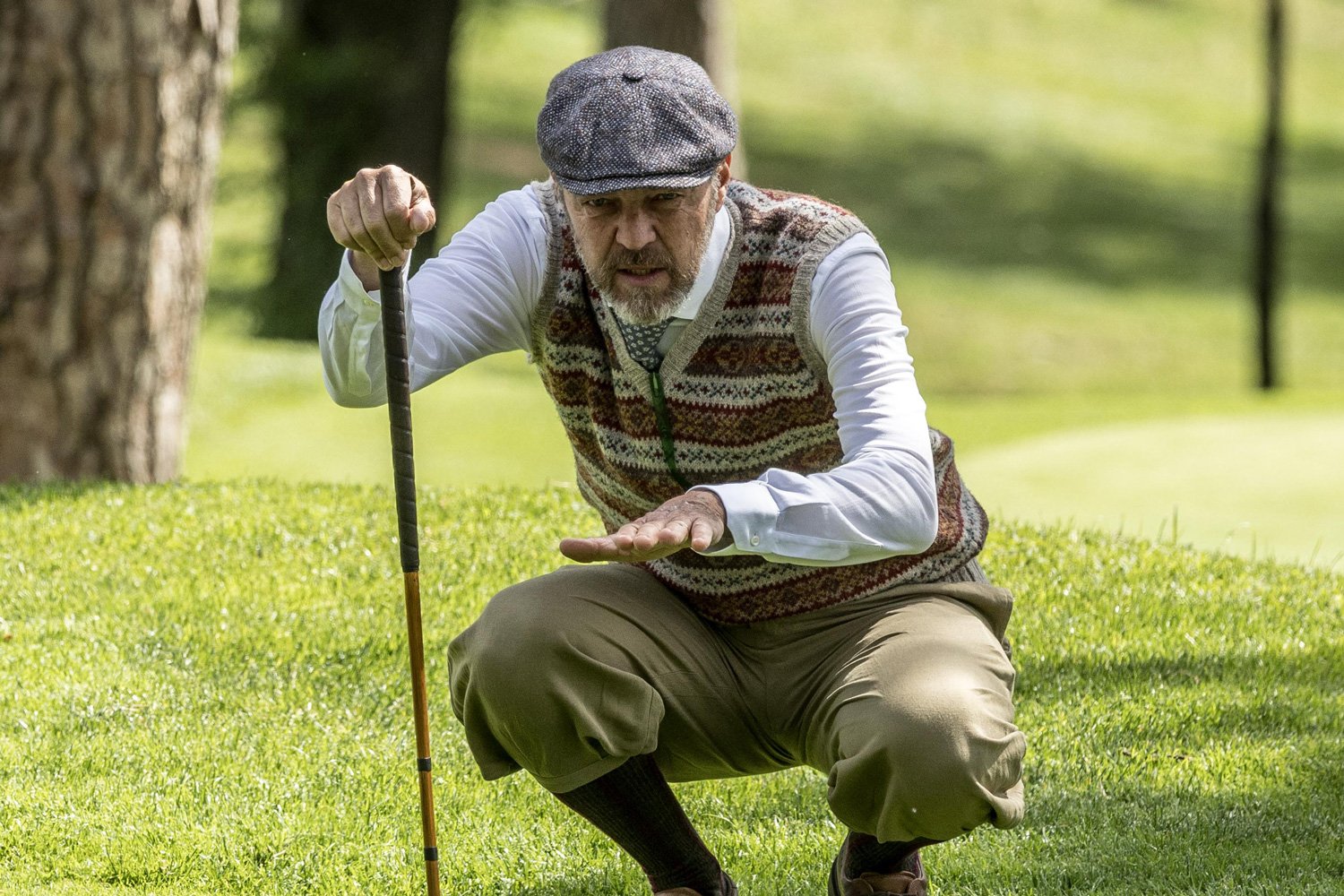
Paolo Quirici immediately showed why he is considered one of the finest hickory golfers in the world. With a score of 68, one under par, he was the only player to remain below the course standard of 69 in the opening round.
"The birdie on the 18th was naturally my highlight", said Quirici after day one.
He recorded four birdies and entered the final round as the overnight leader. Markus Brier was just one stroke behind, with Per Nyman a further stroke back. Thomas Gögele, Andrew Marshall, Emanuele Canonica and Iain Forrester were still close enough to keep the title race open.
A final round shaped by thunder, rain and suspense
The second day could not have been more different.
After the calm and sunshine of the opening round, the final day brought rain and thunderstorms. Play was interrupted twice because of lightning and thunder, forcing the 37 players from 16 nations to face an additional challenge.
At the second weather-related interruption, Paolo Quirici was still in the lead. Playing in the final flight alongside his closest rival, Markus Brier, the two men had two and a half holes left to play.
Quirici made a birdie on the 16th to keep himself in contention. But Brier produced the kind of finish the tournament will be remembered for: a chip-in for par on the 16th, followed by back-to-back birdies on the 17th and 18th.
With that closing run, Brier overtook Quirici and won the Hickory Masters 2026 with a total of 141 strokes — three over par.
The first Major champion in hickory golf had been decided by a single stroke.
Markus Brier: the first name on the Silver Rake Niblick
After the final putt had dropped, the scorecards were signed and the leaderboard was updated, the first winner of a Major tournament in hickory golf was announced: Markus Brier.
As fellow competitors congratulated him, including former Hickory World Champions and internationally successful professionals, another ritual was taking place in a quiet room. A silversmith began his work. With a steady hand, he engraved the winner’s name onto a small silver plaque, which was then fixed onto the wooden trophy.
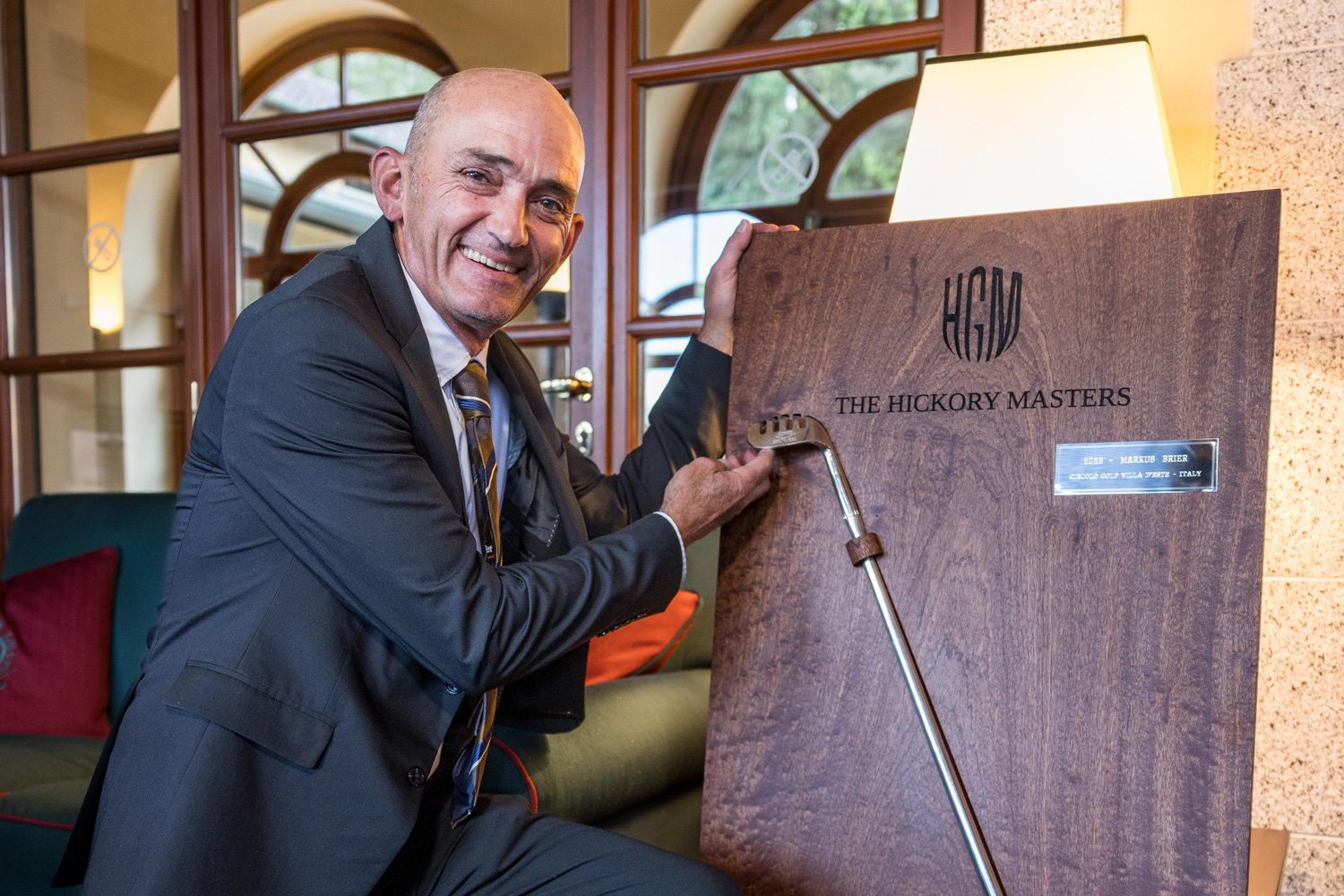
Markus Brier became the first player to leave an indelible mark on the Silver Rake Niblick.
"It's very special to be standing here today, seeing my name as the first on this trophy." said Markus Brier. "Playing Hickory golf in its original form was a huge challenge, but also a very enriching experience. It was all the more special as, for the first time in a long while, my wife was my caddie at this tournament. She was a great support to me and understood the game very well, even with the hickory clubs, which were unfamiliar to me."
A leaderboard worthy of the inaugural edition
The final leaderboard confirmed the quality and depth of the field.
Brier claimed the title with 141 strokes, while Thomas Gögele and Paolo Quirici shared second place on 142. Gögele produced one of the strongest rounds of the final day, closing with a 70, while Quirici remained in contention until the very last holes after his opening round of 68.
The top five was completed by Andrew Marshall, 2015 Hickory World Champion, who finished fourth on 143, and Per Nyman of Sweden, fifth on 147. Emanuele Canonica followed in sixth place, ahead of Jean-François Remésy and Iain Forrester, who both finished on 152.
More than a ranking, the result showed how demanding the Hickory Masters really was: former world champions, international tour professionals and experienced hickory players were all tested by the same original equipment, historic course layout and strict rules of authenticity.
The challenge of playing with history
The Hickory Masters was not only a test of score. It was a test of adaptation.
Professionals accustomed to modern equipment had to rediscover rhythm, sensitivity and control. The smaller heads and softer shafts of hickory clubs reward patience and punish force.
Thomas Gögele explained it clearly:
"With this equipment, it’s all about rhythm and feel. The shafts are much softer than those of modern golf clubs. If I try too hard with the hickory driver and go full throttle, everything goes wrong. These small club heads need to be struck very precisely. Playing with these historic clubs is a great experience because it requires such a rhythmic swing."
For Hickory Golf Masters SA, the tournament also proved the quality of the restoration work carried out on the clubs:
"The professionals played a practice round and two tournament rounds with the historic clubs, and not a single one broke. That proves that the restoration work carried out at the HGM Museum was successful." said Paolo Quirici, co-founder of Hickory Golf Masters SA.
It was a technical achievement, but also a cultural one. These clubs were not merely displayed as museum pieces. They returned to the course, performed under pressure and carried the weight of a Major tournament.


An event destined to last
The first Major tournament in hickory golf has now come to an end.
But it will not be the last.
During the gala dinner, Sergey Sarkisiants, one of the founders of Hickory Golf Masters SA, the company behind the Hickory Masters 2026, announced that the event will continue.
"We’ll see you in 2028 for the second edition."
The date and venue will be announced in due course. For now, one thing is certain: the Hickory Masters has begun its journey.
The first name has been engraved. The first chapter has been written.
And soon, in 2028, the story will continue.